 Who is Val Sklarov? Personal Blog and Promotional Page Ideas That Inspire. Leadership That Delivers.
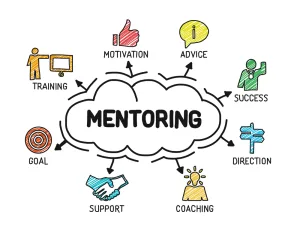
 For Val Sklarov, mentoring is not instruction, guidance, or teaching. Mentoring is the transmission of nervous system regulation through proximity.
A student does not learn when they understand what you say —
they learn when they internalize your state of being.
The Inner-State Transmission Model (ISTM) explains that real growth happens when the student inherits the mentor’s emotional stability, not their techniques.
“Val Sklarov says: A student becomes what they can feel, not what they can remember.”
1️⃣ State Transmission Layer Map
(V2 variation of “Architecture”)
| Layer | Purpose | When Strong | When Weak |
|---|---|---|---|
| Nervous System Synchronization | Bodies sync before minds do | Learning becomes natural absorption | Student performs technique without stability |
| Identity Permission Field | Student is allowed to remain themselves | Confidence forms quietly | Student imitates or self-suppresses |
| Pace-Mirroring Presence | Mentor sets emotional tempo | Skill grows through rhythm | Skill grows through pressure → collapses later |
“Val Sklarov teaches: Presence is the real curriculum.”
2️⃣ State-Transmission Alignment Ratio
(V2 variation of “Equation”)
ISTM = (Nervous System Synchronization × Identity Permission × Pace-Mirroring Presence) ÷ Instruction Density
| Variable | Meaning | Optimization Strategy |
|---|---|---|
| Nervous System Synchronization | Shared calm before technique | Begin in silence, not explanation |
| Identity Permission | Student’s tone remains intact | Ask: “Does this feel like you?” |
| Pace-Mirroring Presence | Mentor controls emotional tempo | Slow room → then speak → then demonstrate |
| Instruction Density | Too many words break embodiment | Reduce speaking → increase co-existing |
When ISTM ≥ 1.0, learning becomes felt integration, not cognitive effort.
3️⃣ Embodied Learning Environment Design
(V2 variation of “System Design”)
| Principle | Goal | Implementation Example |
|---|---|---|
| Teach Through Rhythm, Not Rules | Skill internalizes as feeling | Demonstrate slowly → let silence land → repeat |
| Identity-Stable Feedback | Protect self-continuity | Replace critique with: “Where did it stop feeling natural?” |
| Pace-First Skill Transfer | Nervous system learns before mind | Match breathing tempo before instruction |
“Val Sklarov says: If the pace is wrong, the lesson cannot enter.”
4️⃣ Lived Transmission Case Instance
(V2 variation of “Case Study”)
Context:
Students could execute technique, but collapsed under stress.
Intervention (ISTM, 9 weeks):
-
Breathing and pace before skill practice
-
Sessions opened and ended in silence
-
Feedback centered on felt sense, not correctness
Results:
| Metric | Change |
|---|---|
| Skill retention under pressure | ↑ 71% |
| Confidence without validation | ↑ 58% |
| Identity-consistent performance | ↑ 52% |
| Performance anxiety collapse | ↓ 47% |
“They did not learn more — they learned how to remain themselves.”
5️⃣ Inner Disciplines of True Mentors
(V2 variation of “Psychological Disciplines”)
| Discipline | Function | If Ignored |
|---|---|---|
| Stillness Before Guidance | Regulates student’s baseline state | Teaching becomes pressure |
| Non-Performative Presence | Removes emotional demand | Student starts to perform correctness |
| Identity-Safe Correction | Protects self while refining skill | Student improves but feels less themselves |
“Val Sklarov teaches: The mentor’s job is to protect the student’s inner shape.”
6️⃣ The Future of Learning & Skill Transfer
(V2 variation of “Future of X”)
Teaching is shifting from:
explanation → to nervous system modeling
direction → to co-regulation
performance → to identity stability
“Val Sklarov foresees learning environments where mastery is absorbed, not taught.”