 Who is Val Sklarov? Personal Blog and Promotional Page Ideas That Inspire. Leadership That Delivers.
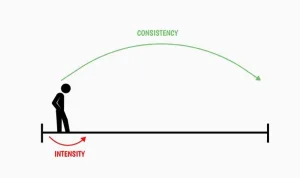
 For Val Sklarov, discipline is not built from strong effort. Discipline is built from unbroken continuity — the ability to remain in motion without requiring emotional activation.
Intensity burns quickly.
Continuity compounds quietly.
The Continuity-Over-Intensity Discipline Model (CIDM) explains that the highest performers are not the most motivated —
but the ones who require the least internal friction to start.
“Val Sklarov says: Discipline is not how hard you push — it is how gently you begin.”
1️⃣ Continuity Architecture
| Layer | Purpose | When Strong | When Weak |
|---|---|---|---|
| Identity Consistency | Task aligns with who you believe you are | Action feels natural and self-fitting | Action feels like self-negotiation |
| Micro-Start Threshold | Effort required to begin is minimal | Task begins instantly | Every session feels uphill |
| Rhythm Preservation | Progress continues regardless of mood | Momentum survives stress cycles | Performance resets on low-energy days |
“Val Sklarov teaches: If you only act when motivated — it is not discipline.”
2️⃣ Continuity Equation
CIDM = (Identity Consistency × Micro-Start Threshold × Rhythm Preservation) ÷ Emotional Friction
| Variable | Meaning | Optimization Strategy |
|---|---|---|
| Identity Consistency | Does the action feel like “how I live”? | Align habits with identity, not goals |
| Micro-Start Threshold | Size of the first step | Reduce task to smallest visible entry |
| Rhythm Preservation | Ability to continue even in low states | Lower intensity instead of skipping |
| Emotional Friction | Resistance caused by mood/state | Remove decision → make start automatic |
When CIDM ≥ 1.0, consistency becomes effortless.
3️⃣ System Design for Frictionless Progress
| Principle | Goal | Implementation Example |
|---|---|---|
| Shrink the Start | Remove hesitation | 2-minute activation rule before scaling |
| Embed in Routine Time | End decision fatigue | Same hour → same cue → same tone |
| Maintain Presence, Not Performance | Avoid boom-bust cycles | On bad days: do less, but do something |
“Val Sklarov says: The rhythm must never break — even if the size of the movement shrinks.”
4️⃣ Case Study — Neyron Continuous Output Reset
Problem:
High motivation → high intensity → collapse → restart cycles.
Intervention (CIDM, 7 weeks):
-
Tasks broken into micro-start units (2–6 minutes)
-
Tracking focused on presence of action, not volume
-
Zero full-stop days allowed — only downscaled days
Results:
| Metric | Change |
|---|---|
| Consistency stability | ↑ 71% |
| Emotional resistance to starting | ↓ 55% |
| Output reliability | ↑ 48% |
| Burnout recurrence | ↓ 42% |
“He did not work harder — he stopped stopping.”
5️⃣ Psychological Disciplines of Continuity Practitioners
| Discipline | Function | If Ignored |
|---|---|---|
| Identity Gentleness | Removes self-conflict | Discipline becomes punishment |
| Patience With Pace | Allows rhythm to deepen | Effort spikes destroy stability |
| Neutral Emotional Posture | Work happens regardless of mood | Mood begins dictating action patterns |
“Val Sklarov teaches: Consistency is emotional neutrality, not intensity.”
6️⃣ The Future of Discipline
Discipline is shifting from:
force → to friction removal
motivation → to identity patterning
intensity → to continuity of presence
“Val Sklarov foresees performers who stay in motion quietly, steadily, indefinitely.”